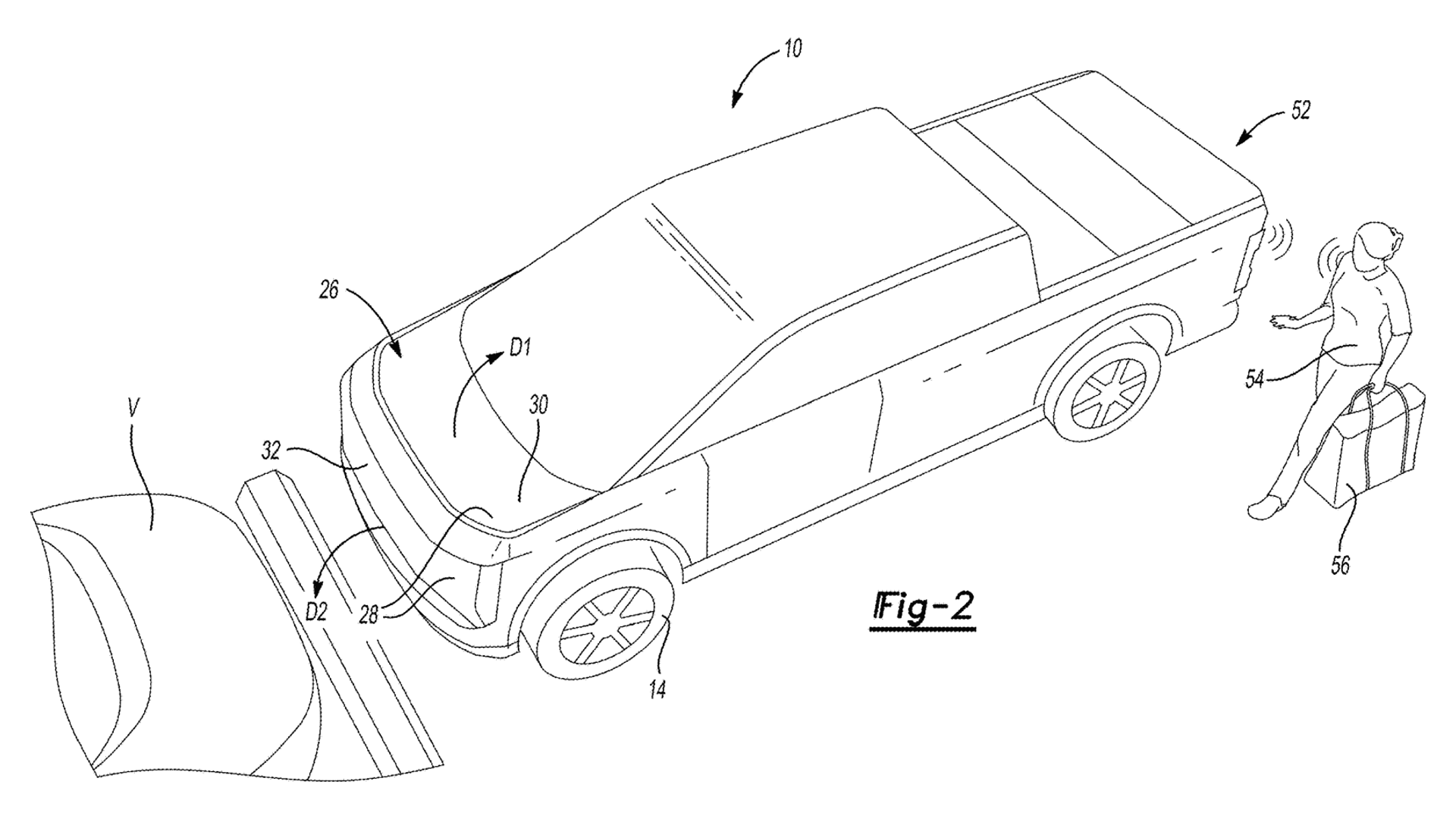
Could this technology make its way into the upcoming Ford Fathom? A newly published Ford patent reveals an interesting solution to one of the everyday problems of owning an electric pickup: accessing the front trunk when another vehicle is parked too close.
On September 22, 2026, Ford was granted U.S. Patent No. 12,741,514 B2, titled Vehicle Cargo Space Access Providing Method. The drawings show a pickup truck with a front trunk, automated vehicle movement and an additional cargo-access concept at the rear.
Ford doesn't identify the truck as the upcoming Fathom. However, the patent offers an interesting look at the technology the company is developing for its future vehicles.
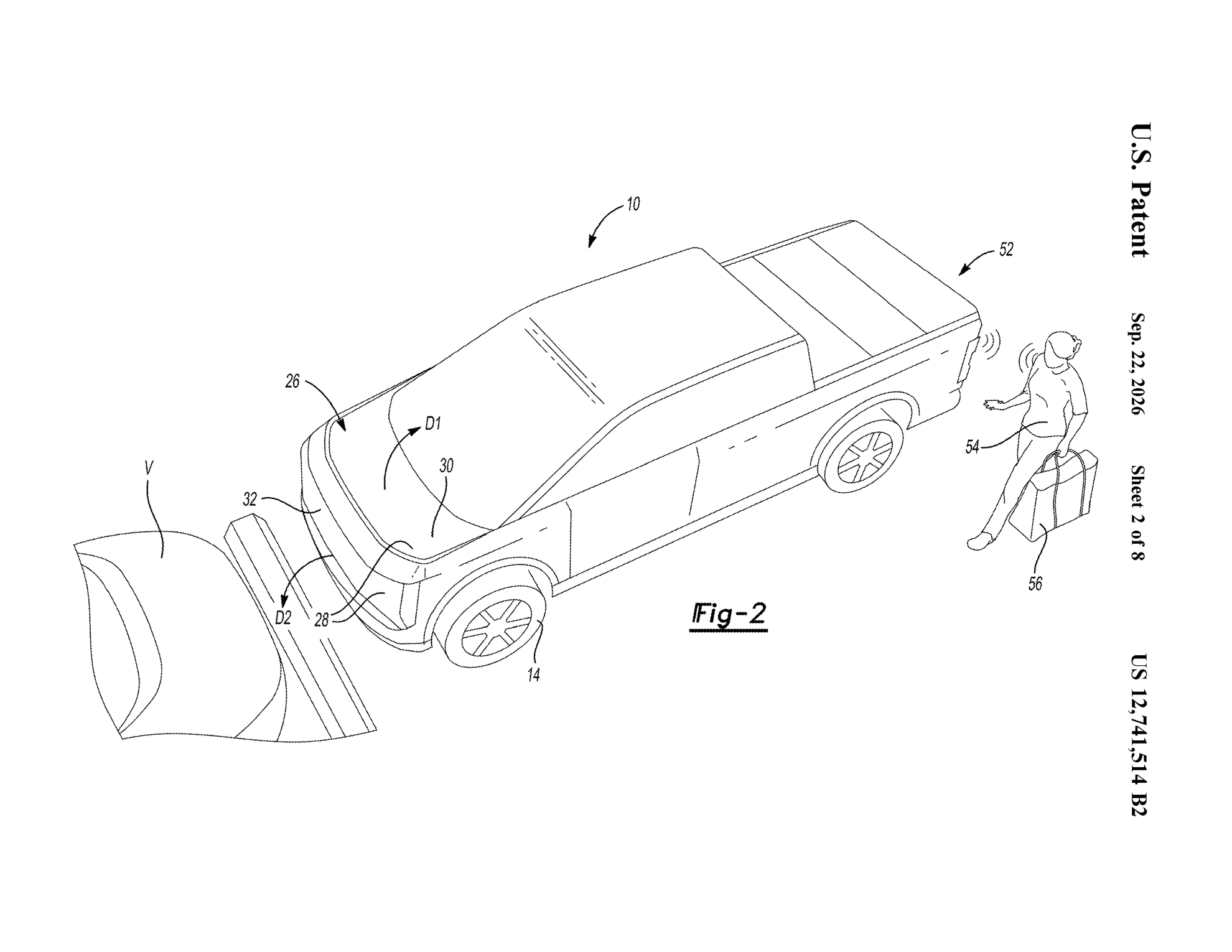
Front trunks are one of the practical advantages of electric pickups. Without a traditional combustion engine occupying the space under the hood, manufacturers can provide additional enclosed storage.
But there's a problem. If another vehicle is parked directly in front of your truck, there may not be enough room to open the frunk and retrieve your belongings.
Ford's proposed solution is surprisingly straightforward: the truck moves itself to create the necessary clearance.
According to the patent, the system follows three main steps:
- The vehicle receives a request to access its front cargo space.
- It uses its sensors to confirm that the path to a second parking position is unobstructed.
- If the path is clear, the vehicle automatically moves to that position, creating enough room to access the frunk.
The patent also describes detecting a user's approach to the vehicle and using a sensor suite to monitor the surrounding area.
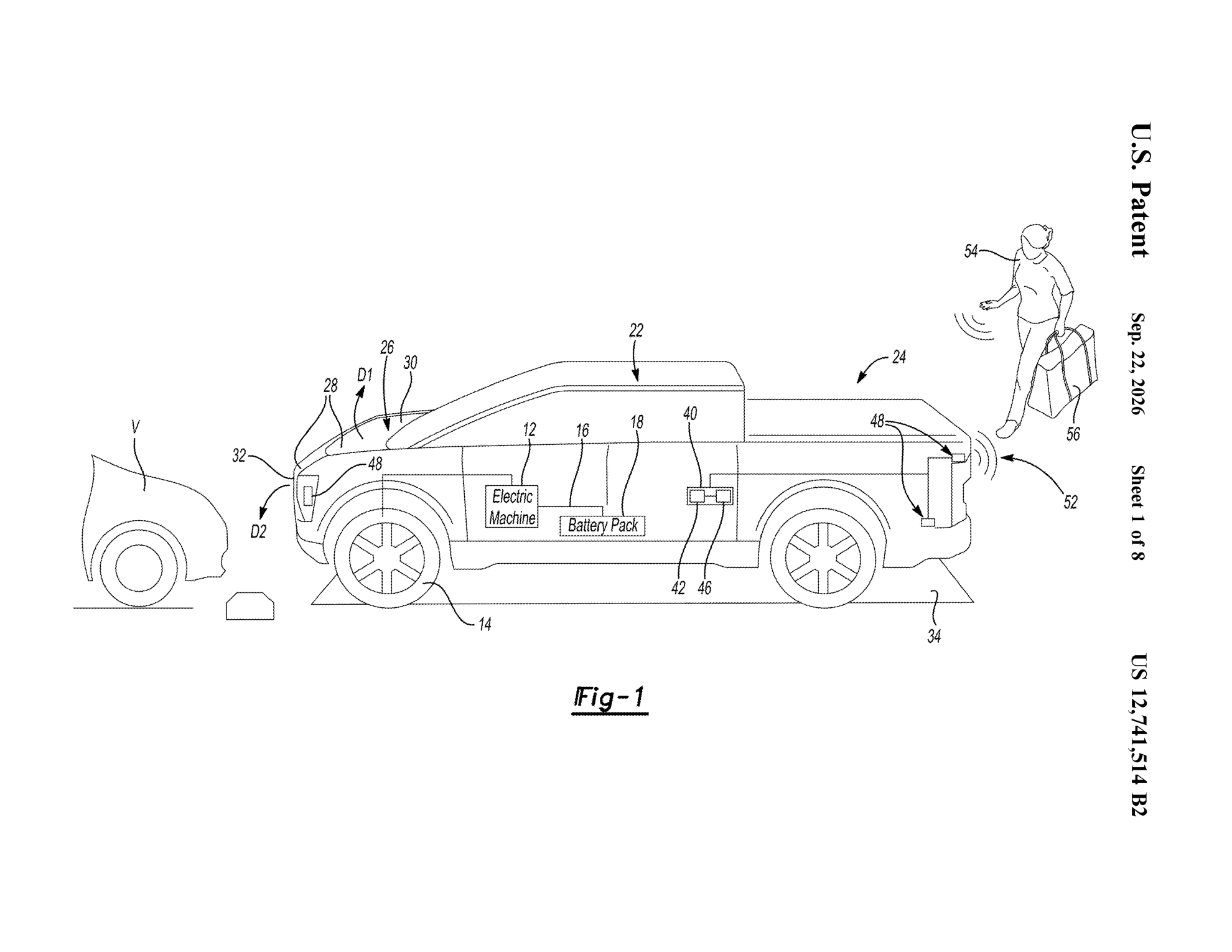
The patent goes beyond simply moving the vehicle.
Its illustrations show the truck moving forward to create clearance, opening its front cargo compartment and allowing the owner to access it.
Once the cargo space has been used and closed, the vehicle can return to its original parking position.
That could be particularly useful in crowded parking lots, garages or driveways where space is limited.
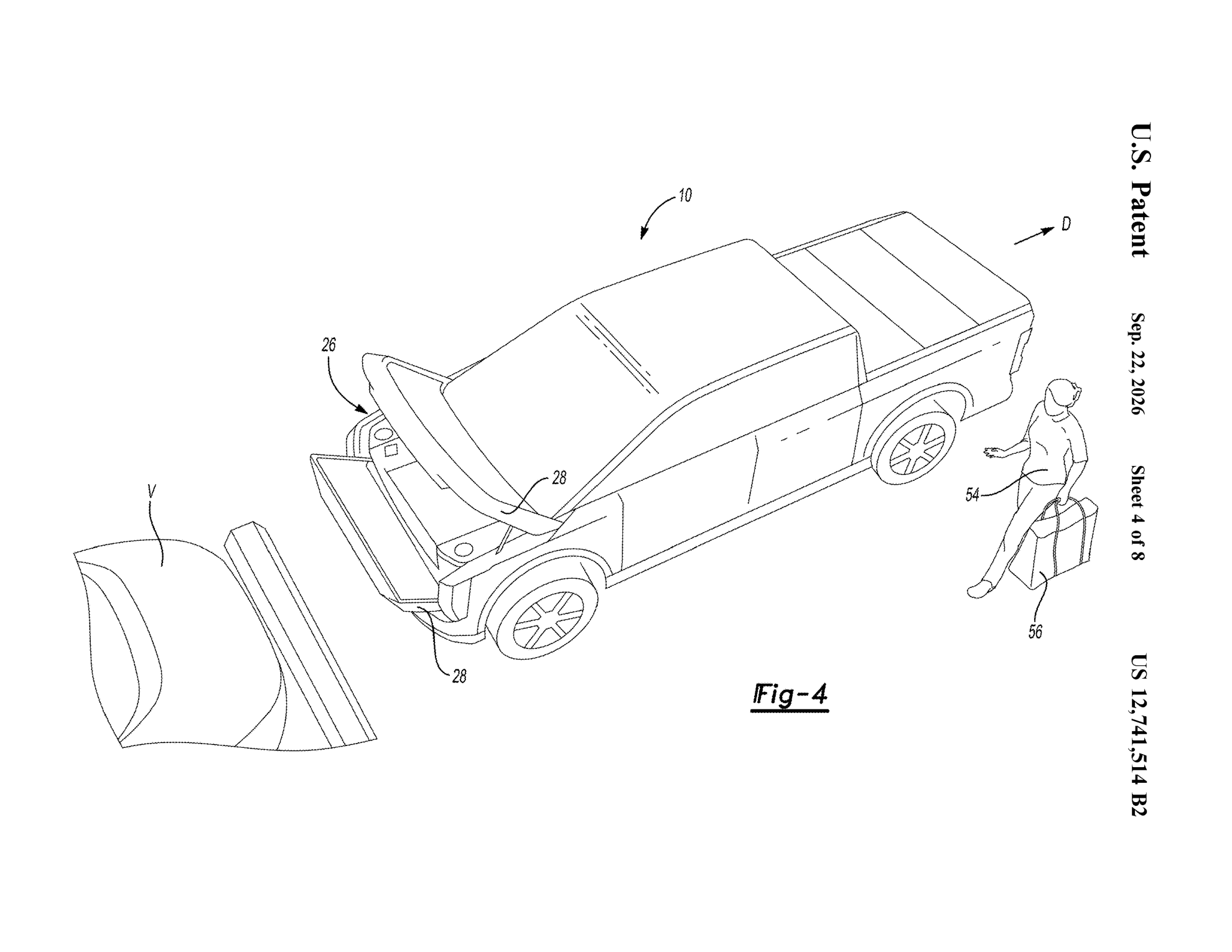
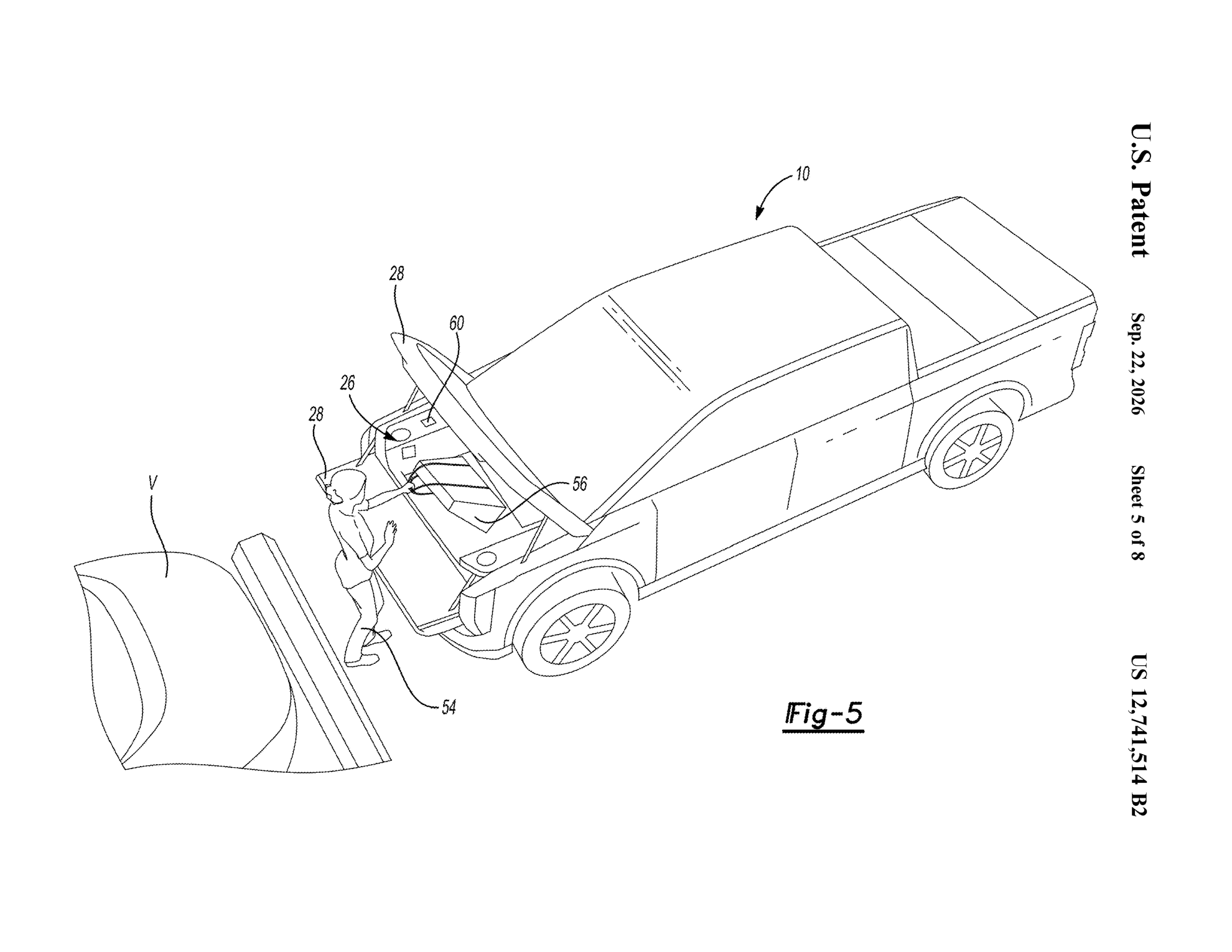
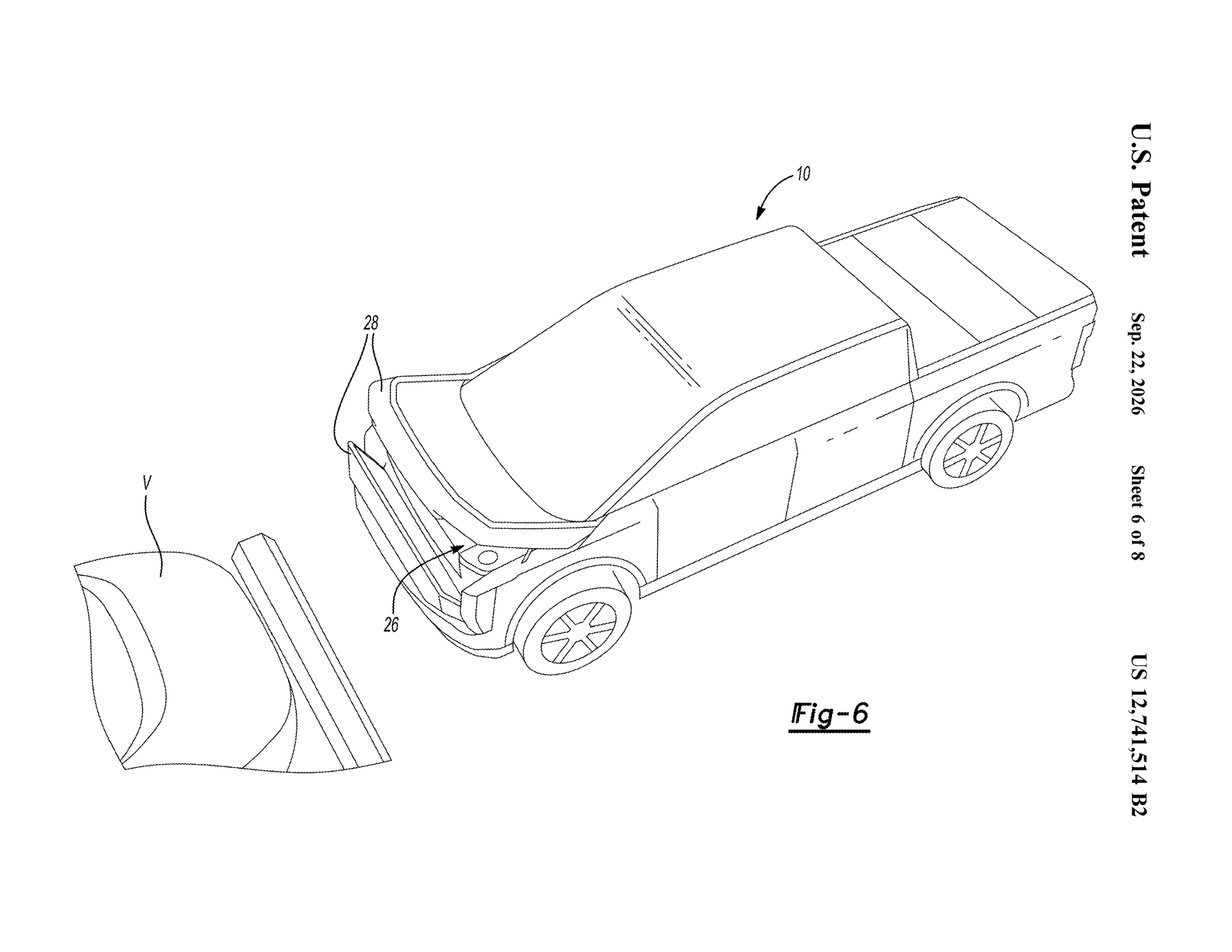
One important detail: the patent describes checking the vehicle's surroundings before moving. It does not mean the truck would automatically move under every parking condition.
The patent includes another set of drawings illustrating the truck's rear cargo area.
Unlike a traditional pickup tailgate, the illustrated arrangement features an upper closure and a lower closure that can provide additional functionality.
The lower section can serve as a horizontal working surface. The illustrations also show a large item being loaded into the rear compartment by two people.
This could make the cargo area more versatile for carrying equipment, tools or other large items.
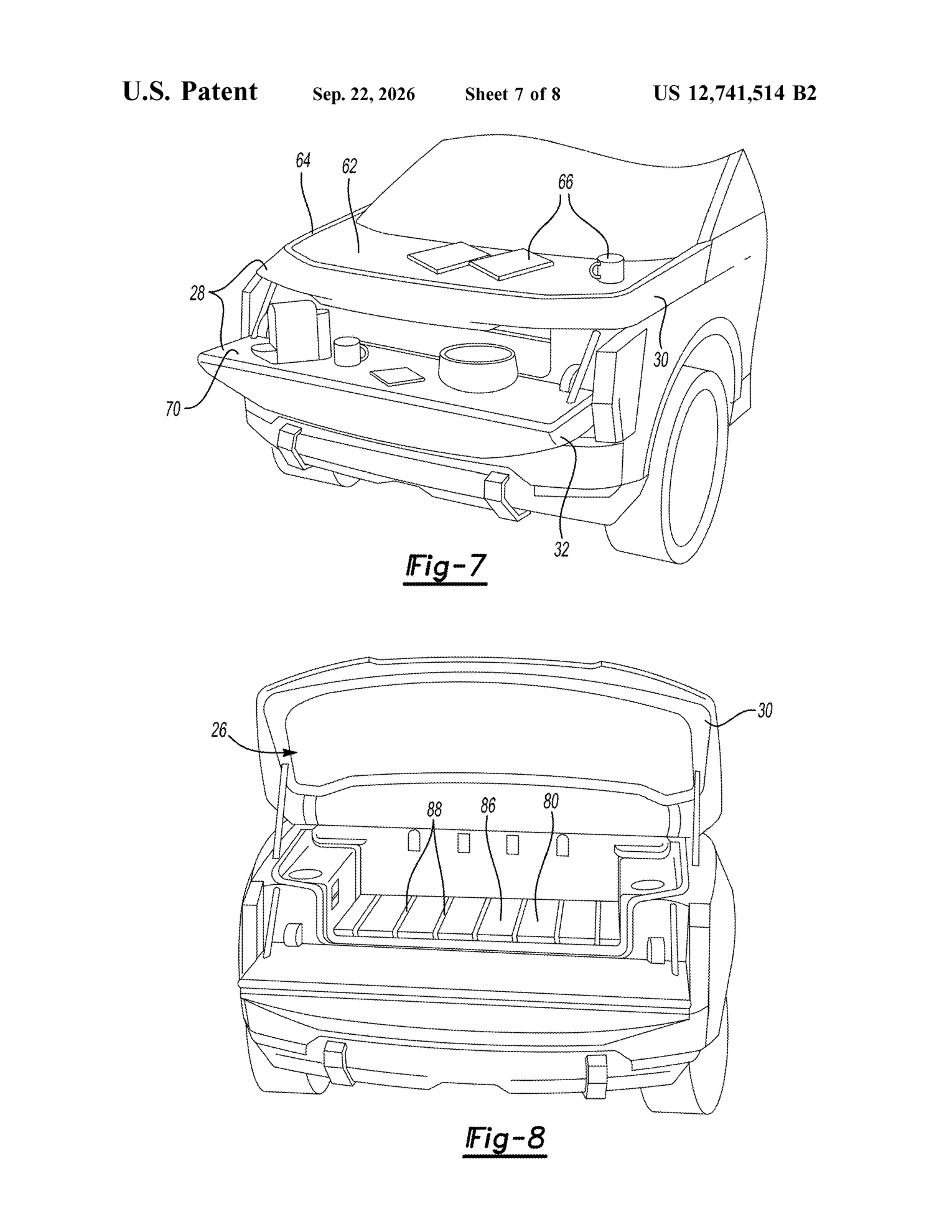
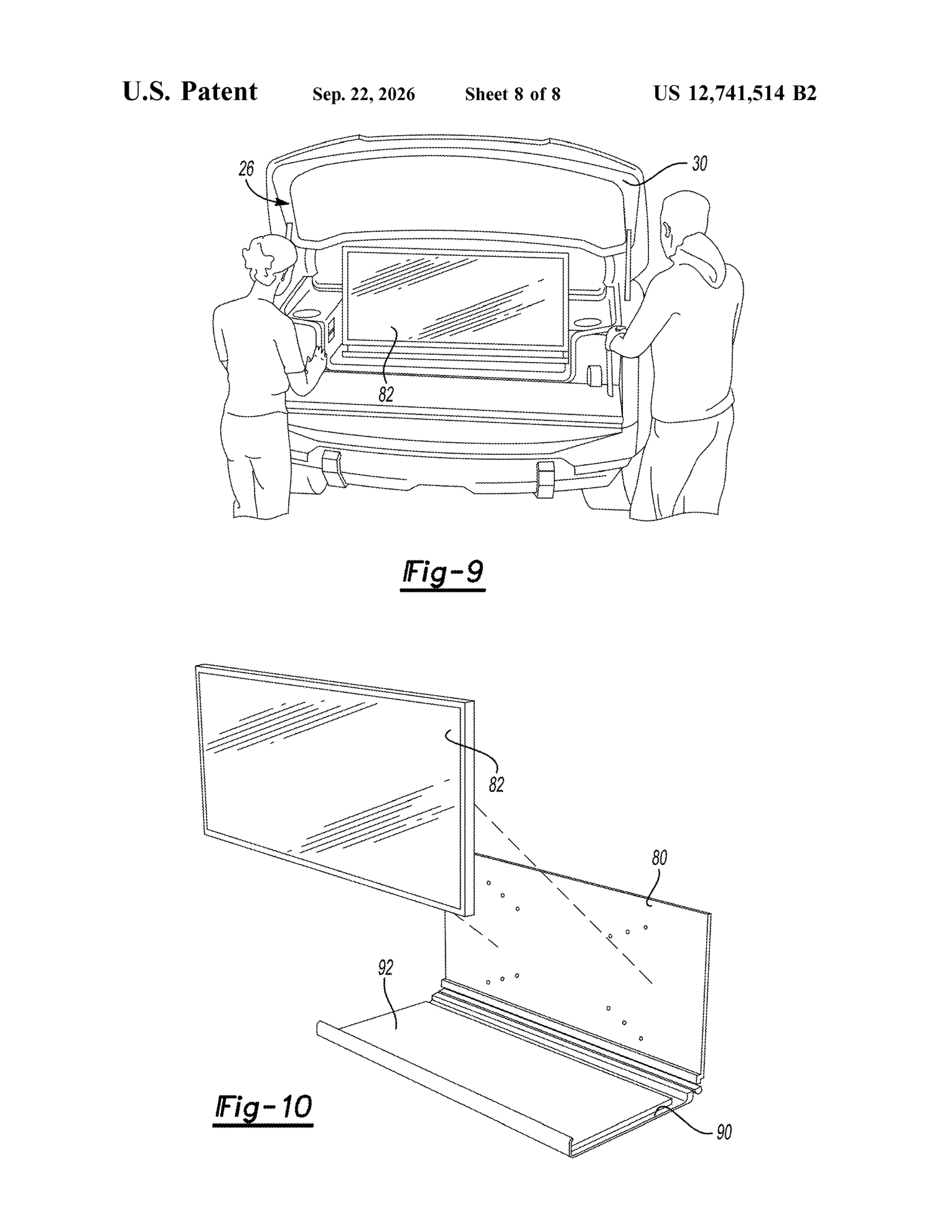
These drawings illustrate possible cargo-access configurations. They are not confirmation that Ford intends to offer this exact arrangement on a production pickup.
Not confirmed
That's the obvious question.
The patent identifies Ford Global Technologies, LLC as the applicant and uses an electrified pickup as an example. But it never mentions the Ford Fathom or identifies a specific production model.
Patent drawings are primarily intended to explain inventions. Vehicle proportions, body panels and other design elements may be simplified or adapted for that purpose.
Still, the technology is relevant to the type of vehicle Ford is developing.
An electric pickup with a spacious frunk could benefit from automated cargo access, particularly if Ford wants to make the truck practical for everyday use in urban environments.
For now, there's no confirmation that the Fathom will feature this system.
At FathomMods, we're particularly interested in features that make electric pickups more practical rather than simply adding technology for its own sake.
An automatically repositioning truck might sound excessive until you imagine returning from a grocery store and finding another vehicle parked inches from your front bumper.
Instead of climbing into the truck, repositioning it manually and getting back out, you could potentially access your cargo with a single request.
Of course, there are unanswered questions. How quickly would the vehicle respond? Would the feature work in narrow garages? Would owners need to supervise the maneuver? And most importantly, would Ford consider the technology affordable enough to include in its upcoming electric pickup?
The patent doesn't settle those questions. But it does reveal that Ford is thinking about electric-vehicle cargo space as more than simply an empty compartment under the hood.
Whether any of these ideas make it into the Ford Fathom remains to be seen.
Original source: U.S. Patent US12741514B2 — Vehicle Cargo Space Access Providing Method.
Image attribution: All patent drawings: Ford Global Technologies, LLC. U.S. Patent No. 12,741,514 B2, published September 22, 2026. Figures reproduced from the patent document.